
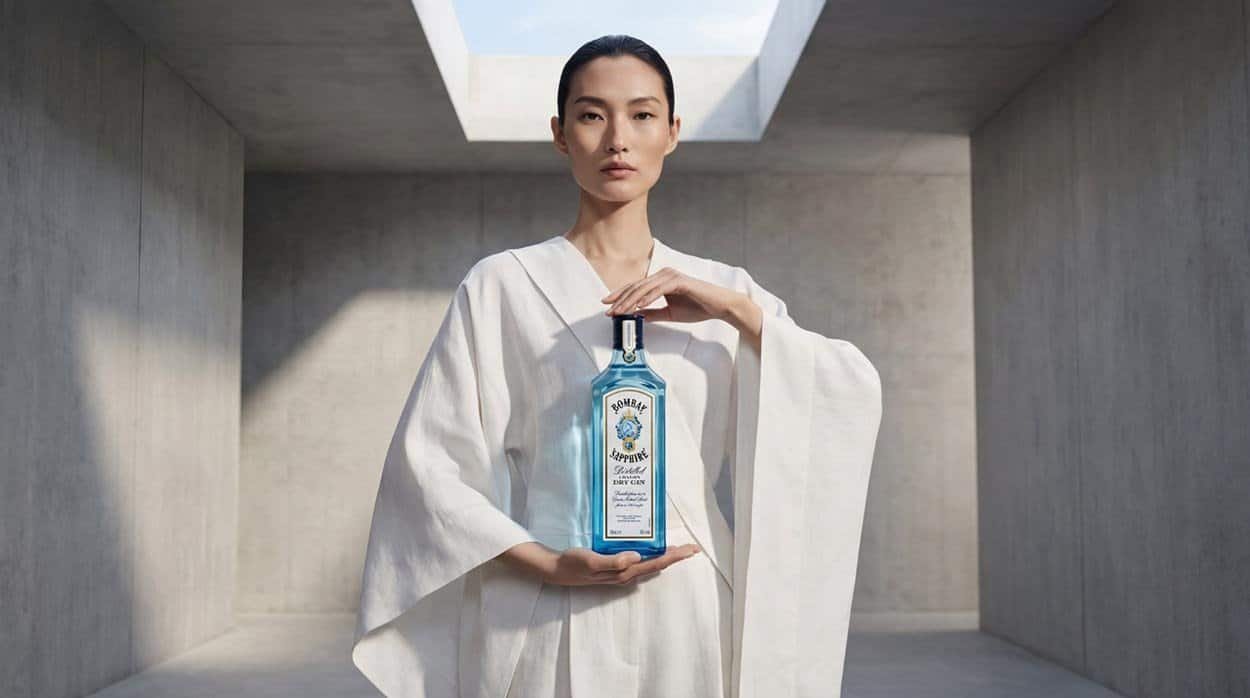
The Death of the ‘Good, Fast, Cheap’ Triangle: Custom AI Imagery vs Traditional Photography
You have likely stared at a whiteboard and repeated the Project Management mantra until it lost all meaning: “Good, Fast, Cheap—pick two.”
For decades, this has been the iron law of marketing production. If you wanted high-end, bespoke visuals (Good), you had to sacrifice speed and budget to organize a complex photoshoot.
If you needed assets yesterday (Fast) and under budget (Cheap), you were forced into the soulless purgatory of generic stock photography. As marketing executives, we accepted this trade-off as an unavoidable cost of doing business.
But let’s be honest about the hidden cost of that trade-off: it kills creativity. Traditional photography isn’t just expensive; it is friction-heavy.
It requires location scouting, casting, weather contingencies, and weeks of post-production. By the time the assets arrive, the cultural moment you were trying to capitalize on has often passed.
Conversely, stock photography forces you to retroactively fit your creative vision into an image that thousands of other brands—potentially even your competitors—are already using. You aren’t creating; you are settling.
This is why the emergence of generative models is not merely a technological upgrade; it is a structural revolution. We are witnessing the collapse of the compromise.
For the first time, the creative fidelity of a bespoke photoshoot is available with the immediacy of a Google search. The friction that once defined high-quality production is evaporating, leaving only pure creative intent.
When we analyze the landscape of custom AI imagery vs traditional photography, the conversation usually gets stuck on ethics or copyright. While those are valid discussions, they miss the operational reality.
AI is the only medium that offers the specific originality of a shoot with the logistical ease of a database. It allows you to generate the exact image your campaign requires—down to the lighting, diversity, and product placement—without booking a single flight or renting a studio.
It is time to stop choosing two. The era of the logistical bottleneck is over.
This manifesto explores why clinging to the old production triangle is slowing your brand down, and how embracing AI-generated visuals restores your control over the creative process. It allows you to move at the speed of culture without sacrificing an ounce of quality.
1. Anatomy of a Production Nightmare (The “Good” but “Slow/Expensive” Path)
The Hidden Friction of Physical Shoots
Physical production places a massive tax on your creativity called logistics. Before a single shutter clicks, you are buried in weeks of pre-production meetings.
You have to secure location permits, handle casting calls, and coordinate complex travel logistics. You spend more time reviewing catering menus than you do refining the visual concept.
Data suggests that for a standard global campaign, project management consumes nearly 60% of the allocated hours. Only a fraction of your time is spent on actual creative work.
Then comes the “sunk cost” anxiety. If the weather turns bad or the model lacks chemistry on the day of the shoot, you are stuck.
The budget is gone. You cannot simply hit “refresh” on a physical set.
2. The “Stock Photo” Band-Aid (The “Fast/Cheap” but “Bad” Path)
Why Generic Kills Brand Equity
When the budget is tight, we turn to stock sites. This is the fastest way to dilute your brand equity.
We all know the “Stock Photo Face.” You see a model in a bank advertisement, and then you see the exact same person selling heartburn medication three days later.
Using stock forces you to retro-fit your campaign. You write your copy to match an image you found, rather than creating an image that matches your copy.
Imagine you need a visual for a “bold partnership.” In stock photography, you get two generic suits shaking hands against a white background.
With custom creation, you get a cinematic, noir-style shot of two silhouettes merging in a futuristic skyline, perfectly color-graded to your brand palette. The difference isn’t just aesthetic; it is strategic.
3. The New Heavyweight: Custom AI Imagery vs Traditional Photography
Defining the Shift in Medium
This brings us to the core comparison. We are looking at a fundamental shift in how pixels are generated.
AI is not just “better stock.” It is virtual photography. It creates pixels based on your specific intent, not on what is currently available in a library.
Here is how the economics and logistics break down in the battle of custom AI imagery vs traditional photography:
| Feature | Traditional Photography | Custom AI Imagery |
|---|---|---|
| Cost | High (Travel, Talent, Gear) | Low (Subscription/Compute) |
| Turnaround | Weeks to Months | Hours to Days |
| Creative Control | Limited by physics/location | Infinite (Pixel-perfect control) |
| Scalability | Linear (More photos = More money) | Exponential (Generate 100 variations instantly) |
Traditional photography relies on capturing a moment that exists. AI imagery relies on visualizing a moment that should exist.
4. Shattering the Iron Triangle
How to Get Good, Fast, and Cheap Simultaneously
The Project Management Triangle relies on scarcity. Generative AI introduces abundance.
Good: You achieve photorealism and perfect brand consistency. You control the composition, the lighting, and the emotion without compromise.
Fast: You reduce production timelines from six weeks to six hours. You move from concept to final asset in a single afternoon.
Cheap: You eliminate Operational Expenditures (OpEx). There are no equipment rentals, no flight costs, and no location fees.
Think of traditional photography like building a physical set for a theater play. It takes lumber, sweat, and time.
AI is a holodeck. You speak the command, and the set appears instantly around you. If you don’t like the furniture, you change it with a sentence.
5. Speed as a Creative Asset
Iteration is the New Perfection
Speed is not just about efficiency; it is a creative multiplier. In the old model, the high cost of production made us risk-averse.
You couldn’t afford to take a wild swing on a photoshoot that cost $50,000. So, you played it safe.
With AI, the cost of failure is near zero. You can test 50 wild, avant-garde ideas in the time it used to take to plan one safe concept.
This allows for true “Reactive Marketing.” If a trend breaks on social media at 9:00 AM, you can have high-fidelity, on-brand visuals ready by lunch.
Fluidity is the new competitive advantage. You are no longer locked into a single hero image for the entire quarter.
6. Implementation: A Workflow for the Modern Brand
From Brief to Asset in 24 Hours
How does this look in practice? The workflow shifts from logistics management to prompt curation.
Step 1: The Brief. You input your brand guidelines and creative vision into the system. You define the mood, the lighting, and the subject.
Step 2: Generation & Curation. You generate dozens of variations. You act as the creative director, selecting the best outputs and discarding the rest.
Step 3: Upscaling & Retouching. You finalize the select few. You upscale them for print or web and apply final color grades.
Imagine launching a seasonal summer campaign. Traditionally, you would have needed to shoot the summer collection in February to be ready.
Now, you can generate the visuals the week before launch based on the latest weather forecasts and consumer sentiment data.
7. The End of Compromise
The barrier to entry for world-class visuals has collapsed. You no longer need a six-figure budget to look like a billion-dollar brand.
Are you still paying for logistics, or are you paying for vision? The choice is no longer forced upon you.
It is time to regain your creative sovereignty. Stop letting flight schedules dictate your marketing calendar.
Regain your control. Start your first custom AI project today and see what happens when you don’t have to compromise.
Frequently Asked Questions
Is custom AI imagery legally safe for commercial use?
Yes, provided you use enterprise-grade platforms that indemnify users. Most modern platforms grant full commercial rights to the creator. Always check the specific terms of service of the tool you are using to ensure compliance with your brand’s legal standards.
Can AI really match the quality of a professional photographer?
For commercial advertising, social media, and web assets, yes. Current models achieve photorealism that is often indistinguishable from traditional photography. However, for capturing specific live events or journalism, traditional photography remains the superior choice.
How does AI handle specific brand products?
Advanced workflows now allow for “product training.” You can upload reference images of your specific product, and the AI can generate new scenes featuring that exact item. This bridges the gap between generic generation and specific brand assets.